Category: Internet of Things

Oh boy, security is a growing issue in the growing I.O.T.

Millions of Internet-connected devices may currently be exposed to potential hacking.

More than 178 million connected devices and systems in the U.S. are exposed to security vulnerabilities, according to a new study by Trend Micro.

The study, comprising an analysis of exposed cyber assets in the 10 largest U.S. cities, found that Los Angeles has the highest number of exposed assets, followed by Houston and Chicago.

The top four cities each account for more than 2.5 million exposed cyber assets, according to Trend Micro.

Exposed cyber assets are defined as Internet-connected devices and systems that are discoverable on search engines and accessible by the public Internet, according to Trend Micro.

Among the top devices are routers, webcams and DVRs, which have previously been used in IoT-driven cyberattacks, as the IoT Daily reported at the time (U.S. To Issue IoT Principles After Internet Cyberattack).

The number of exposed routers seems to be somewhat consistent among top cities. Houston leads with 3,500 exposed routers, followed by Los Angeles (3,000) and New York City (3,000).

However, the study said that the majority (79%) of exposed DVRs are in Chicago and more than three quarters (80%) of all exposed DVRs are made by TiVo.

Internet-connected cameras that are most exposed include home cameras made by D-Link and security cameras made by GeoVision and Avtech, according to Trend Micro.

The study notes that exposure doesn’t mean all of these devices have been compromised, but rather that they could be.

The risks associated with such exposure can range from the systems leaking sensitive information without the owner knowing to being hacked and leveraged in a cyberattack.

Here is the Trend Micro ranking of level of exposure in the 10 largest cities, in order:

  1. Los Angeles
  2. Houston
  3. Chicago
  4. Dallas
  5. Phoenix
  6. San Jose
  7. New York
  8. San Antonio
  9. San Diego
  10. Philadelphia


http://www.mediapost.com/publications/article/295268/potential-security-threats-found-in-178-million-co.html?utm_source=newsletter&utm_medium=email&utm_content=headline&utm_campaign=100628&hashid=GDUskglhnvDLb35PkVj_E8-yz3s

Idiot Proof Appliances 

http://readwrite.com/2017/01/11/whirlpool-ces-2017-dl4/

People who struggle with frozen pizza and microwaveable food instructions will be happy to know that Whirlpool unveiled a selection of kitchen appliances able to cook your food without pressing any buttons.

Unveiled at the Consumer Electronics Show (CES) 2017 in Las Vegas, the appliances include a double-wall oven for $2,600, a microwave for $1,000, a gas range for $1,800 and an electric range for $1,700. All appliances work with iOS and Android devices.

See also: Intel launches modular Compute Card at CES 2017

All four appliances connect to Wi-Fi and are able to understand instructions from Whirlpool’s Scan-to-Cook mobile app. All the homeowner needs to do is scan the instructions and send them to the appliance, which will begin cooking at the right temperature and time.

Whirlpool already has a few compatible products, including DiGiorno Pizza and Alexia frozen fries, but for the price of each appliance you would expect more.

All work with Amazon Alexa

All Whirlpool appliances will receive Amazon Alexa support as well, letting homeowners set the oven to a certain temperature or turn the microwave off without entering the kitchen.

Bringing the kitchen online may help the poorest of home cooks out, but we doubt any of them will want to spend more than $1,000 just to make sure they don’t overcook frozen fries. That said, a few Reddit commenters have made the argument that this could be useful for those that typically forget how to cook or when to turn off the oven when inebriated.

Whirlpool expects to start selling the appliances in the summer.

ALLIANCE allows for synchronization and more

Wireless connections within the Internet of Things may soon rival the capabilities of wired systems, based on new standards being released by Wi-Fi Alliance.

The new standard, called TimeSync, is a Wi-Fi feature that brings precise timing and synchronized operation to wireless devices by aligning them to the same internal clock. It was introduced at CES, just concluded in Las Vegas.

This type of synchronization would enable properly synced audio and video playback wirelessly across a full surround-sound system, according to Kevin Robinson, VP of marketing at Wi-Fi Alliance.

“As Wi-Fi becomes more firmly planted in the connected home space, it is growing from simply delivering Internet connectivity to connected devices to now moving into the interconnections between the components themselves,” Robinson told the IoT Daily.

“Part of the reason Wi-Fi has been as successful as it has is that it’s a very flexible and capable platform for other technologies, other ecosystems, to build on top of and it really allows industry to continue to innovate on top of this very capable platform,” he said.

Bringing a cross-brand standard to wireless devices is the goal and Wi-Fi Alliance plans to launch a certification program for device manufacturers to integrate the TimeSync capability into their products later this year.

The Alliance now has more than one flavor of connectivity tailored to different use cases.

For example, Wi-Fi ac, which was updated in mid-2016, is designed to deliver Internet access to wide areas and multiple devices simultaneously. An example Robinson referenced was a recent implementation of Wi-Fi ac access points throughout Gillette Stadium in Foxborough, MA, which brings high-speed Internet across the entire stadium.

On the other side, Wi-Gig, which was launched in October 2016 and was shown in products at CES, brings short-range, but very high performance speeds. This type of connectivity can enable wireless virtual reality experiences.

The TimeSync feature is not intended to act as a type of connection, but rather as a coordinating layer that can enable better experiences, according to Robinson.

“One way to look at it is it’s an ingredient that will help other technologies in applications perform better,” Robinson told the Daily.

“TimeSync would allow you to create that precise coordination between various devices, whether it’s a VR headset, speakers in the room or a wireless headset,” he said.

Wi-Fi Alliance also plans to launch an indoor location-tracking capability later this year, which would operate similarly to GPS with accuracy within a few feet.

There are currently 8 billion Wi-Fi devices in active use, according to Robinson.


http://www.mediapost.com/publications/article/292636/new-wi-fi-standard-syncs-home-devices-in-real-time.html?utm_source=newsletter&utm_medium=email&utm_content=readmore&utm_campaign=99529

BREAKING— I have returned from CES 2017 without a cold!

BREAKING— I have returned from CES 2017 without a cold! Each year CES typically leaves its attendees with a version of the funk that typically takes you down upon returning home. Here is to a healthy, funk free, 2017!

This year marks my 16th year attending CES, the default event for those who create, sell and market the technology in our personal lives. Each year I write up a post on the best things I have seen. This year, I am going to shake it up because times, they are changing…

Over the last decade, I have made it a point to drive to Vegas for the event. It proves to be a great plan as the meeting rooms, dinners and meet-ups tend to be spread out in multiple hotels or restaurants. It also serves as a great tool for reflection as the 4-5 hours is often plagued with poor cell service and true quiet time.

So, on my drive home I asked the question (to myself)…

Where is it all going?

To best answer this, I thought about the evolution of the CE (Consumer Electronics) industry over the last 17 years.

Since 2010, CES has been mostly about displays, plastic, hard drives and processors. From ultra flat monitors to tablets, innovation was best observed in the physical products on the floor. Booths were constructed with items spinning under spotlight and demonstrations meant people picked them up or watched their 4k brilliance.

If you follow the trades (and mainstream media) you heard that Amazon stole the show this year with Alexa. You also likely heard people say that they didn’t see anything that wowed them. Well, both are correct. However, I think this is not the full story…

The next 5 years or so will feel like nobody is innovating because innovation has always been measured in physical product. More and more “things” are being connected and as a result, the physical is becoming software enabled. As things become connected, it will be hard for them to be MORE connected. Thus, the innovation we are going to see and need to be better at managing will be in the ability for companies to understand customer needs and create a personalized experience IN or AROUND the products for which they produce.  This will appear more as incremental innovation to outsiders but it truly is the holy grail of innovation.


We are in for an era of innovation where consumers buy and recommend based on a product or services ability to “fit them” or “adapt to their needs”. How and where they find out that these features fit them is more important that going to see a product on a shelf at Best Buy. These experiences will carry the innovation banner forward for the years to come.- my 2017 prediction


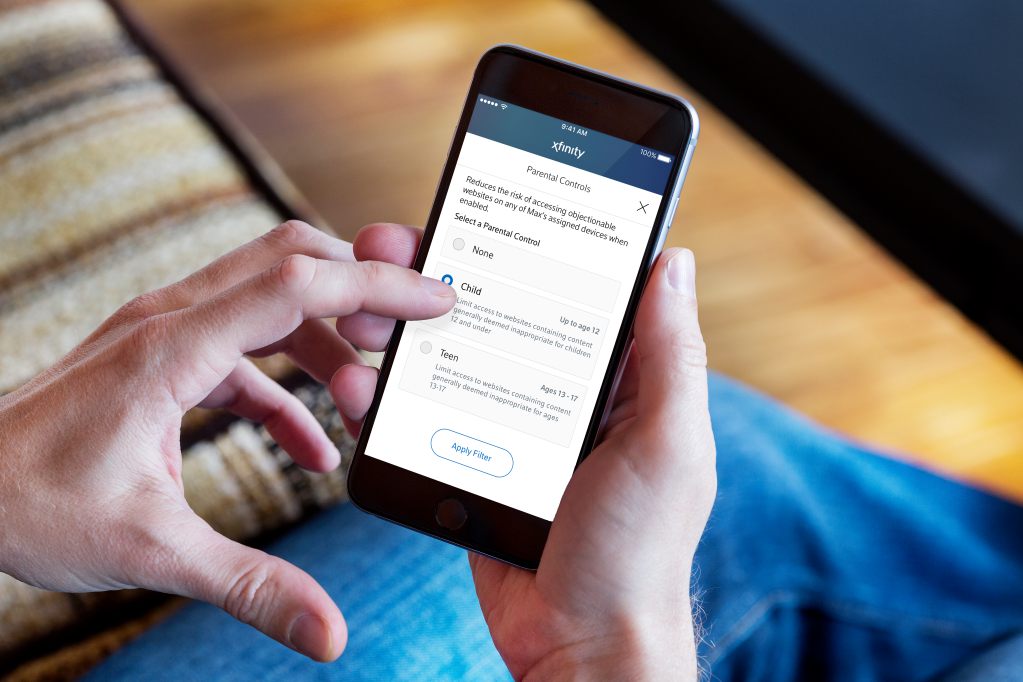
I saw this first hand this year in several instances. Most impressive was the demonstration of Comcast’s Xfinity network customer experience. The super smart, customer focused team at Comcast welcomed me into their suite at Venetian and offered a tour of what will be rolling out to all their customers in just a few months. Sure there was a box on table but the presentation was nearly 100% about the experience and the ability for the customer to control what mattered to them most. For example, Xfinity customers will soon be able to create profiles for their family members on their network allowing them to monitor, report and establish boundaries. This is great for families with kids who have personal devices but also the avid streamer who may be looking for better performance in their streaming.

xfinity-smarter-ecosystem.pngxfinity-smarter-laptop.png


xfinity-smarter-parental-control.png

They have streamlined the onboarding process too, demonstrating that innovation doesn’t have to be wrapped in hard plastic. The new experience will be automatically enabled in the first half of 2017 for the approximately 10 million existing Xfinity Internet customers who have a compatible Xfinity Wireless Gateway. That number is expected to grow to more than 15 million by the end of the year as Comcast’s new Advanced Wireless Gateway becomes available to customers. This Advanced Gateway is capable of delivering up to nine gigabits per second over Wi-Fi within the home, supports voice, home monitoring and automation applications and will be the device Comcast uses to make one gigabit per second Internet speeds available across its entire service area.

My hat is tipped to the Comcast team for the fortitude and courage to show up at CES with commitment to the customer experience. Your investment there will win over those markets where you compete against outdated providers. Now, if only you offered your services in Orange County, California!

The number of connected devices is expected to rise from 10 to 50 devices by 2020. However, we are in for a period of time where “The Bigs” and “Start-Ups” alike will compete for your spare change via features that enable a more relevant, useful and personalized experience rather than push more product. Sure we will see people replacing physical items (Dishwashers, Cars, Toasters, etc.) with a new connected version but the idea that we will have tons of new devices in our home in addition to currently non-connected devices is likely a fallacy with the exception of companies like SEVEN HUGS.

  • The Bigs: Will compete with a value proposition of an Ecosystem of products that work together. Their typically closed system (think Apple) will begin to turn people away as consumers are more and more wanting things to work together regardless of the platform.
  • The Start-Ups: Will deliver against niche experiences and gain market share because they deliver amazing experiences that serve a specific persona’s needs. They will of course be gobbled up by a Big in the future but until then, they will blaze trails at a pace only a smaller, nimble company can and a pace that consumers have grown to expect.

Stop looking for the new plastic on the shelf and start looking for the features that make it all “work for you”.

Personalization is going to change consumer expectations, security, user interface design and content delivery. As it pertains to the working world, Intel’s Brian McCarson calls this- Phase Two of the Internet of Things. The use of data to create a more optimized, personalized and relevant experience.

One size fits all will never work again- thankfully. We are in for an era will brands and manufacturers are going to be looking to consumers to help shape (real-time) the features, functions and experience with preference, data and feedback. 

I am excited for a great 2017 filled with innovation, personalization and better customer experiences.

Pete
 

2016 Tech Year in Review

Dec 30, 2016 9:00 AM EST
AMAZON.COM INC
-15.28
AT CLOSING, DEC 30TH
749.87 USD
ALPHABET INC-CL A
-10.43
AT CLOSING, DEC 30TH
792.45 USD

⇑  THE GOOD  ⇑


▲ Tech Superpowers Eat the World: For the first time this year, technology companies at times held each of the top five spots of the world’s most valuable public companies. The combined market value of tech’s Five Fab — Apple Inc., Alphabet Inc., Microsoft Corp., Amazon.com Inc. and Facebook Inc. — was $2.4 trillion as of Dec. 27, or more than 11 percent of the S&P 500’s value. That means tech superpowers are inching toward the 16 percent share of the S&P 500 they held at the peak of the tech bubble in March 2000. The bad news: Big Tech’s growing power makes them a target of politicians worldwide.

Tip Top Tech
The five biggest tech companies’ share of S&P 500 market cap
Source: Bloomberg
Note: Companies listed from highest to lowest market cap.

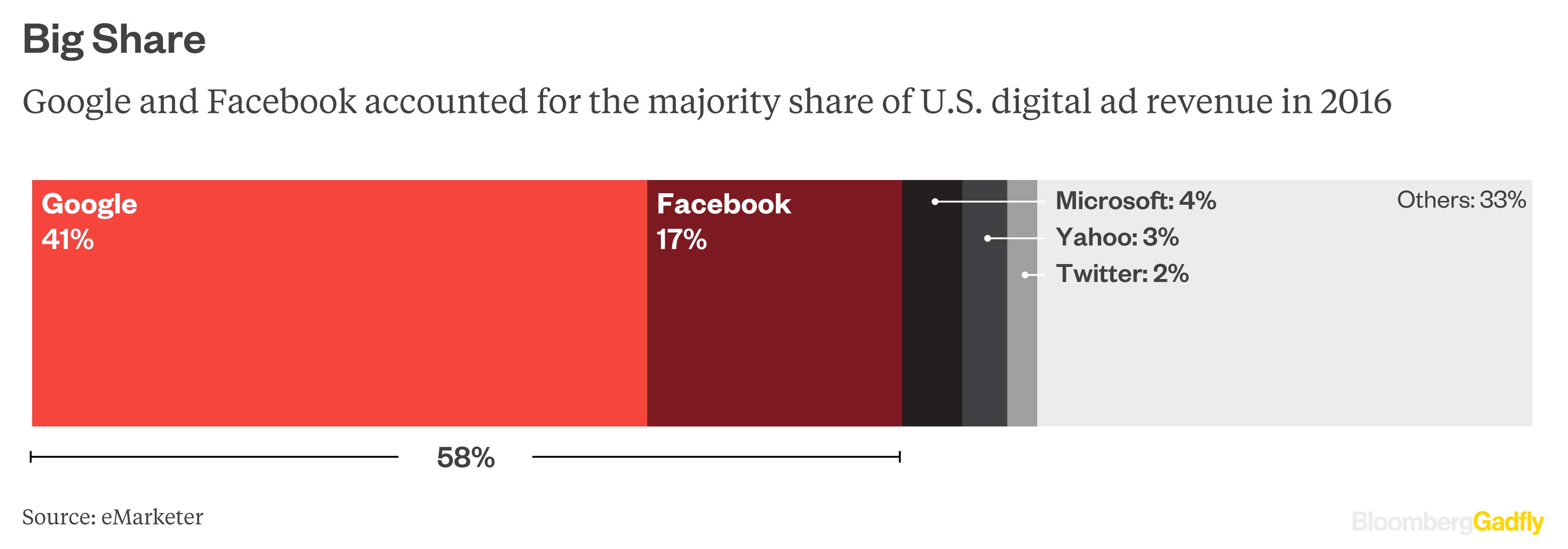
▲ Advertising Becomes a Two-Horse Race: Alphabet’s Google and Facebook are popular destinations for billions and their technology makes it easy for carmakers and detergent companies to pinpoint the right people for their product pitches. As a result, the two gobble a combined 58 percent of all the advertising purchased in the U.S. online or on mobile phones. With Google and Facebook as the only companies generating significant digital ad sales, every other company dependent on advertising — from TV networks to news organizations — is rethinking existing business approaches.

google fb ad spend-01

▲ Amazon’s Ambition Knows No Bounds: It became clear in 2016 that no industry should be free from Amazon paranoia. It’s a giant retailer of every product and service, a growing entertainment power, and a would-be transportation giant that aims to control land, air, sea and new horizons. In an example of the impact Amazon’s ambitions can have, its Amazon Web Services cloud business — a type of computing Amazon created from nothing 10 years ago — made up more than 100 percent of Amazon’s total operating profit in the third quarter (after accounting for international losses), and it’s not an exaggeration to say AWS has changed the direction of both Amazon and the tech industry.

▲ China Tech Flexes Its Muscles: China’s tech giants Baidu Inc., Alibaba Group Holding Ltd. and Tencent Holdings Ltd. are unimaginably big and broad, cutthroat competition has honed the next-generation stars such as Didi Chuxing, and many novel tech ideas born in China are being copied elsewhere. China’s tech powers are extending their advantages at home and stretching into other parts of the globe, though few have made major inroads into the U.S. yet.

Internet Tidal Wave
China’s roughly 700 million internet users are double the population of the U.S.
Sources: International Telecommunication Union, World Telecommunication/ICT Development Report and database, and World Bank estimates; Bloomberg Intelligence

▲ Television Finally Meets Technology: Television’s dominance of Americans’ leisure time and advertisers’ wallets has peaked, and changes are slowly coming to the fundamental nature of TV. Commercial-free binge watching on Netflix, the popularity of nontraditional video on smartphones and the development of new types of online TV services are reshaping entertainment. Will digital “television” simply replicate the TV we’re used to or become something else entirely?

Changing the Channel
Online pay-TV services like AT&T’s DirecTV Now are estimated to reach nearly 15 million subscribers by 2020, according to UBS estimates
Source: UBS

⇓  THE BAD  


▼ Apple Hits a Wall: The decade-long era of Apple’s impossibly fast growth and profits came to an end. Apple’s revenue fell this year for the first time since 2001. The company can’t outrun a changing market for smartphones globally, and it continues to grapple with government resistance to its power on issues such as law enforcement, taxation and manufacturing.

No Longer Defying Gravity
The last time Apple’s annual revenue declined was 15 years ago
Source: Bloomberg
Note: Data for fiscal years.

▼ Startups Reckon with Austerity-ish: After two years of seemingly limitless funding for young technology companies, there was a marked retrenchment this year. Money invested in tech startups remains historically high but is on track to decline materially from 2015. Smartly, many private tech companies started to manage for profits — or “profits” — instead of straining to grow at all costs. Otherwise the fallout from the investment pullback could have been much worse.

Pullback
Amount invested in companies backed by venture capital
Source: CB Insights
*Data through Q3.

▼ No Mercy for Yahoo and Twitter: Internet companies have to keep growing, or they die. Yahoo Inc. and Twitter Inc. in 2016 each went through protracted sale efforts — Yahoo found a buyer, Twitter didn’t — and had to deal with the punishing effects of disappearing growth in revenue and users.

Growing Pains
Revenue growth is diminishing for Yahoo and Twitter. Change in revenue from a year earlier:
Source: The companies
Note: Yahoo’s revenue excludes commissions paid to web-search partners.

▼ Batteries Had the Worst Year Ever: Samsung was forced to end production of its Galaxy Note 7 after reports of fires or explosions caused by faulty batteries. The U.S. also forced a recall of hoverboards because of overheating batteries, and Apple dealt with battery life hiccups for its new MacBook Pro line. The (sometimes literal) battery flare-ups in 2016 show the fragility of one of the essential components of computing in everything from smartphones to driverless cars.

Look Out Below
Quarterly revenue for Samsung’s mobile division took a dive in the latest quarter, hurt by recalls to its Galaxy Note 7 phone.
Source: Bloomberg

▼ Old Tech Shrinks: The technology industry is brutal to its stragglers (see Yahoo and Twitter above), and that meant painful job cuts in 2016 at some old-guard companies. IntelCorp., Cisco Systems Inc., HP Inc. and others continued to cut back — in some cases drastically — to offset falling revenue or to shift resources away from declining businesses.

Pink Slip
Legacy tech companies had some major layoffs in 2016
Source: Bloomberg


This column does not necessarily reflect the opinion of Bloomberg LP and its owners.

To contact the authors of this story:
Shira Ovide in New York at sovide@bloomberg.net
Rani Molla in New York at rmolla2@bloomberg.net

To contact the editor responsible for this story:
Daniel Niemi at dniemi1@bloomberg.net

2017 Internet Of Things Security Threats 

Any regular reader of the IoT Daily knows that security and privacy are continuously major IoT issues, especially as more devices enter consumer homes and become Internet-connected.

In the not-so-good-news department, the new report, from cybersecurity company Trend Micro, sees the year ahead coming with an increased breadth and depth of attacks.

The Internet of Things will play a larger role in targeted attacks in 2017, capitalizing on the growing acceptance of connected devices by exploiting unsecured systems, according to the report. Here are some of the security-related predictions for next year:

  • The number of new ransomware families will plateau, only growing 25%, but will branch out into IoT devices and non-desktop computing terminals, like point-of-sale systems or ATMs
  • Suppliers will not secure IoT devices in time to prevent denial of service and other attacks
  • New vulnerabilities will continue to be discovered in Apple and Adobe
  • With 46% of the world’s population now connected to the Internet, the rise in cyber-propaganda will continue
  • New targeted attack methods will focus on evading modern detection techniques to allow targeting of different organizations

As the world becomes more connected through billions of new smart devices, security issues are likely to increase.

In the Internet attack earlier this year, which caused millions of consumers to be locked out of many websites, connected devices like smart doorbells and webcams were compromised.

Trend Micro predicts more of the same for next year.

Any brands and marketers planning to message through or leverage consumer connected consumer devices may want to make sure that security is high on the list.


http://www.mediapost.com/publications/article/291609/2017-internet-of-things-security-threats.html?utm_source=newsletter&utm_medium=email&utm_content=readmore&utm_campaign=99104

Smart Home Consumers Looking For Safety, Comfort 12/20/2016

Consumers in the market for smart home technology aren’t looking to be early adopters or to be as cool as their neighbors. Rather, they are looking to make their homes safer and more comfortable. 

“We already knew that homeowners prioritize safety and peace of mind, and now we know they will achieve this by adding smart home technology,” Julie Link, director of research for Scripps Networks Interactive, tells Marketing Daily. “The surprising part here is that consumers are clearly demanding home technology solutions that deliver efficiency, but also contribute to emotional satisfaction. It’s far less about collecting the latest toys and gadgets to achieve social status.”

Three-quarters of consumers cited those two qualities when shopping for smart home products, compared with only 18% who said they were looking to meet others’ expectations, according to a survey of 700 homeowners by Scripps Network Interactive. Just over two-thirds (68%) of consumers said energy efficiency, leading to cost savings or a higher resale value, was also a driving factor. 

Different demographics had different motivations for adding smart technology, however. Millennials wanted to make the home more convenient, while Gen Xers wanted to make their homes more healthy. Baby Boomers, meanwhile, wanted the technology to add value to their homes. Millennials were the most likely to add smart home technology within the next year, followed by Gen Xers and Baby Boomers. 

“Each generation is interested and committed to smart home technology, but for very different reasons,” Link says. “Millennials, who say the benefit is about making their home work for their lifestyle, expect hyper-customization. If they can get it exactly how they want it, then the technology will play a vital role in their household. Gen Xers’ technology preferences will reflect their personal values — creating a healthy environment in a hectic world. Boomers want to maximize their investment, so if smart home technology can benefit them in the moment and in the long-term, they are fully on board.”

Nearly half (44%) of consumers said they would like to add features such as energy-monitoring and light automation, although only 11% of respondents said they had firm plans to add them. A quarter of all the homeowners surveyed named the kitchen as their top spot to add smart technology, followed by the front door/entryway (15%) and the living room (13%). 

Consumers are also wary about installing these devices themselves. More than half of the consumers surveyed said they wanted to find a professional to help them make smart home decisions. Expense, however, was still the top barrier to purchase, according to the survey.

“The findings seem to indicate the opportunity to be a trusted counselor for consumers, who are clear that they are very interested, but also very confused when it comes to home tech,” says John Dailey, senior VP of corporate ad sales for Scripps Networks Interactive. “A marketer needs to select its messaging with the different generations’ goals 

http://www.mediapost.com/publications/article/291386/smart-home-consumers-looking-for-safety-comfort.html?utm_source=newsletter&utm_medium=email&utm_content=headline&utm_campaign=99023

Consumers are ready for media via IOT

Brands and marketers may want to take a tip as to why people own smart or Internet-connected devices.

The operative word here is useful.

While the majority of U.S. consumers own at least one connected device, the top characteristic of the most popular devices is that they are useful above all else, based on a new study.

While most 97% consumers are aware of connected devices and 62% of consumers own at least one, the reasons for ownership vary.

The study comprised a survey of 1,200 adults representative of the U.S. population conducted by Maru VCR&C for the Interactive Advertising Bureau.

The most popular connected device in the home, of course, is the connected or smart TV with smart glasses at the tail end. Here are the connected devices owned by consumers:

  • 47% — Connected/smart TV
  • 24% — Wearable health tracker
  • 17% — Internet-enabled home control devices
  • 16% — Connected car
  • 13% — Smart watch
  • 11% — Internet-enabled voice command systems
  • 11% — Internet-enabled appliances
  • 10% — VR headsets
  • 7% — Smart glasses

Without the smart TV, the connected things market would not look so robust.

Most significantly the key driver of popular devices is usefulness. In the top four most popular connected devices, that characteristic is number one, ahead of convenient, innovative, luxury item or cool. Here are the top attributes of the top products owned, according to ownership level:

  • 47% — Useful: Connected/Smart TV
  • 24% — Useful: Wearable health tracker
  • 17% — Useful: Internet-enabled home control devices
  • 16% — Useful: Connected car
  • 13% — Luxury item: Smart watch
  • 11% — Luxury item: Internet-enabled appliances
  • 11% — Innovative: Internet-enabled voice command system
  • 10% — Fun: VR headsets
  • 7% — Unnecessary: Smart glasses

For brands and marketers, the Internet of Things is going to lead to new ways of advertising and many consumers seem OK with that.

For example, of those who own any IoT device, the majority (65%) are receptive to IoT advertising. The receptivity to advertising differs based on which device. By device, here are the percentage of consumers receptive to IoT advertising:

  • 95% — Smart glasses
  • 89% — VR headsets
  • 89% — Internet-enabled appliances
  • 87% — Connected car
  • 86% — Smart watch
  • 84% — Internet-enabled voice command
  • 78% — Internet-enabled home control
  • 72% — Wearable health tracker

As might be expected, nearly all connected home devices are currently connected to the Internet. This is true for Internet-enabled voice command systems (88%), home control devices (80%) and Internet-enabled appliances (69%).

Despite all of the new home connectivity, the smartphone remains the hub, at least for the short term. Almost all devices connect with smartphones, computers or tablets at least once a day.

More than half (55%) of consumers are willing to receive ads on their devices in exchange for coupons or discounts, which is consistent with other studies. Of current connected device owners, 65% are open to such ads.

Interest in getting a connected device by those who don’t already have one is pretty high (65%). The top connected device of those most interested in getting one is the connected or smart TV.

Television is not being replaced by the Internet of Things. It is becoming part of it.

Google launches first developer preview of Android Things, its new IoT platform | TechCrunch

Google today announced Android Things, its new comprehensive IoT platform for building smart devices on top of Android APIs and Google’s own services. Android Things is now available as a developer preview.

https://techcrunch.com/2016/12/13/google-launches-developer-preview-of-android-things-its-new-iot-platform/?ncid=rss&utm_source=feedburner&utm_medium=feed&utm_campaign=Feed%3A+Techcrunch+%28TechCrunch%29&sr_share=facebook

Why I joined the OCTANe and Project Hope Alliance Board of Directors

img_0052

I am committed to seeing Orange County take its rightful place on published lists of great places for tech startups and business to grow.

As an investor, builder and lover of all things tech, I am interested in seeing other passionate entrepreneurs commit to setting foundation within our community and throw out the challenge to join me by starting and building here.

Having lived and worked in New York, LA and Long Beach over my career, I can honestly tell you that OC is the most desirable and most conducive for building culture and brand value. The talent pool is growing as is the available capital.

The addition of high potential companies, led by high performing entrepreneurs is great for our economy for all the reasons we already know. However, it is often overlooked that the new tech can be leveraged by local brands enabling first mover competitive advantages and differentiation. Bridging the gap between innovation, start-ups and brands is one of my real passions.

My other passion is finding ways to give back to our community. By combining the mutual interests of a thriving tech and start-up community with the needs of community focused organizations everyone wins.

I am proud to be a member of the Board of Directors for Project Hope Alliance and, as of yesterday, OCTANe.


OCTANe drives technology industry growth and innovation in Orange County by connecting ideas and people with resources and capital. Its members represent Orange County technology executive leaders, entrepreneurs, investors, venture capitalists, academicians, and strategic advisors, all working together to fuel innovation in the OC. The organization has helped more than 800 companies via the LaunchPad™ SBDC accelerator. LaunchPad™-certified companies have received more than $1.7 billion in investment and equity exits. OCTANe annually welcomes more than 7,000 people to its programs and events. More than 2,000 business leaders throughout the Orange County region are OCTANe members. For more information, visit www.octaneoc.org.


Founded in 1989, Project Hope Alliance is ending the cycle of homelessness in Orange County, one child at a time. The nonprofit organization supports homeless students and their families, meeting the unique academic and psychosocial needs of these children via a two-generational approach targeting innovative rapid rehousing and education programs. Since 2012, Project Hope Alliance’s Family Stability Program has worked with over 150 families to end homelessness by moving more than 700 parents and children into permanent housing with financial independence. For more information visit www.projecthopealliance.org.

Last month my interests in The Buddy Group, OCTANe and Project Hope Alliance collided with The Buddy Group Invitational.  What came out of it was huge for the community, huge for the tech and investor scene and huge for local brands (yes, I wrote that knowing full well that you would be putting a Trump accent on the use of “huge”).

I look forward to helping Orange County thrive, grow, give and build sustainable businesses over the next 10 years and create an even better Orange County for my kids and future entrepreneurs to enjoy.

Care to join me? Connect with me on LINKEDIN.