http://digiday.com/brands/calligraphy-culture-humor-recipe-pentel-pens-instagram-success/
Thank you, @tanyadua, for the excellent coverage. Proud of the team and collaboration with a great client.
http://digiday.com/brands/calligraphy-culture-humor-recipe-pentel-pens-instagram-success/
Thank you, @tanyadua, for the excellent coverage. Proud of the team and collaboration with a great client.
Wireless connections within the Internet of Things may soon rival the capabilities of wired systems, based on new standards being released by Wi-Fi Alliance.
The new standard, called TimeSync, is a Wi-Fi feature that brings precise timing and synchronized operation to wireless devices by aligning them to the same internal clock. It was introduced at CES, just concluded in Las Vegas.
This type of synchronization would enable properly synced audio and video playback wirelessly across a full surround-sound system, according to Kevin Robinson, VP of marketing at Wi-Fi Alliance.
“As Wi-Fi becomes more firmly planted in the connected home space, it is growing from simply delivering Internet connectivity to connected devices to now moving into the interconnections between the components themselves,” Robinson told the IoT Daily.
“Part of the reason Wi-Fi has been as successful as it has is that it’s a very flexible and capable platform for other technologies, other ecosystems, to build on top of and it really allows industry to continue to innovate on top of this very capable platform,” he said.
Bringing a cross-brand standard to wireless devices is the goal and Wi-Fi Alliance plans to launch a certification program for device manufacturers to integrate the TimeSync capability into their products later this year.
The Alliance now has more than one flavor of connectivity tailored to different use cases.
For example, Wi-Fi ac, which was updated in mid-2016, is designed to deliver Internet access to wide areas and multiple devices simultaneously. An example Robinson referenced was a recent implementation of Wi-Fi ac access points throughout Gillette Stadium in Foxborough, MA, which brings high-speed Internet across the entire stadium.
On the other side, Wi-Gig, which was launched in October 2016 and was shown in products at CES, brings short-range, but very high performance speeds. This type of connectivity can enable wireless virtual reality experiences.
The TimeSync feature is not intended to act as a type of connection, but rather as a coordinating layer that can enable better experiences, according to Robinson.
“One way to look at it is it’s an ingredient that will help other technologies in applications perform better,” Robinson told the Daily.
“TimeSync would allow you to create that precise coordination between various devices, whether it’s a VR headset, speakers in the room or a wireless headset,” he said.
Wi-Fi Alliance also plans to launch an indoor location-tracking capability later this year, which would operate similarly to GPS with accuracy within a few feet.
There are currently 8 billion Wi-Fi devices in active use, according to Robinson.
▲ Tech Superpowers Eat the World: For the first time this year, technology companies at times held each of the top five spots of the world’s most valuable public companies. The combined market value of tech’s Five Fab — Apple Inc., Alphabet Inc., Microsoft Corp., Amazon.com Inc. and Facebook Inc. — was $2.4 trillion as of Dec. 27, or more than 11 percent of the S&P 500’s value. That means tech superpowers are inching toward the 16 percent share of the S&P 500 they held at the peak of the tech bubble in March 2000. The bad news: Big Tech’s growing power makes them a target of politicians worldwide.
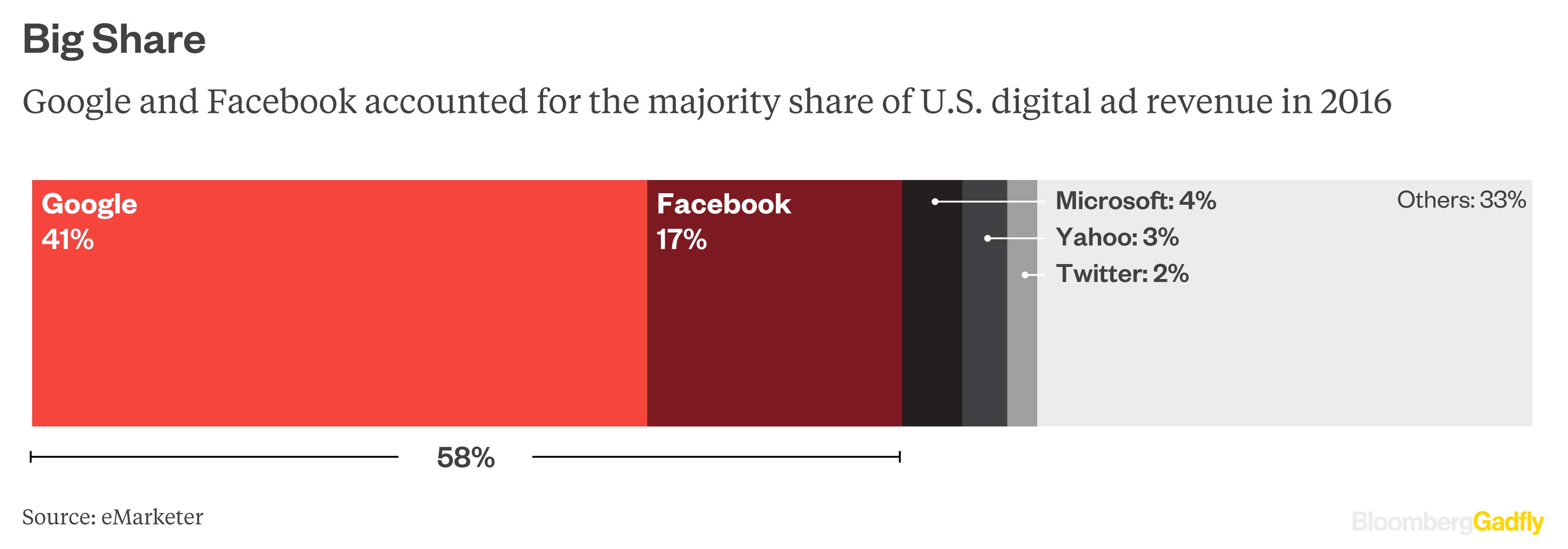
▲ Advertising Becomes a Two-Horse Race: Alphabet’s Google and Facebook are popular destinations for billions and their technology makes it easy for carmakers and detergent companies to pinpoint the right people for their product pitches. As a result, the two gobble a combined 58 percent of all the advertising purchased in the U.S. online or on mobile phones. With Google and Facebook as the only companies generating significant digital ad sales, every other company dependent on advertising — from TV networks to news organizations — is rethinking existing business approaches.
▲ Amazon’s Ambition Knows No Bounds: It became clear in 2016 that no industry should be free from Amazon paranoia. It’s a giant retailer of every product and service, a growing entertainment power, and a would-be transportation giant that aims to control land, air, sea and new horizons. In an example of the impact Amazon’s ambitions can have, its Amazon Web Services cloud business — a type of computing Amazon created from nothing 10 years ago — made up more than 100 percent of Amazon’s total operating profit in the third quarter (after accounting for international losses), and it’s not an exaggeration to say AWS has changed the direction of both Amazon and the tech industry.
▲ China Tech Flexes Its Muscles: China’s tech giants Baidu Inc., Alibaba Group Holding Ltd. and Tencent Holdings Ltd. are unimaginably big and broad, cutthroat competition has honed the next-generation stars such as Didi Chuxing, and many novel tech ideas born in China are being copied elsewhere. China’s tech powers are extending their advantages at home and stretching into other parts of the globe, though few have made major inroads into the U.S. yet.
▲ Television Finally Meets Technology: Television’s dominance of Americans’ leisure time and advertisers’ wallets has peaked, and changes are slowly coming to the fundamental nature of TV. Commercial-free binge watching on Netflix, the popularity of nontraditional video on smartphones and the development of new types of online TV services are reshaping entertainment. Will digital “television” simply replicate the TV we’re used to or become something else entirely?
▼ Apple Hits a Wall: The decade-long era of Apple’s impossibly fast growth and profits came to an end. Apple’s revenue fell this year for the first time since 2001. The company can’t outrun a changing market for smartphones globally, and it continues to grapple with government resistance to its power on issues such as law enforcement, taxation and manufacturing.
▼ Startups Reckon with Austerity-ish: After two years of seemingly limitless funding for young technology companies, there was a marked retrenchment this year. Money invested in tech startups remains historically high but is on track to decline materially from 2015. Smartly, many private tech companies started to manage for profits — or “profits” — instead of straining to grow at all costs. Otherwise the fallout from the investment pullback could have been much worse.
▼ No Mercy for Yahoo and Twitter: Internet companies have to keep growing, or they die. Yahoo Inc. and Twitter Inc. in 2016 each went through protracted sale efforts — Yahoo found a buyer, Twitter didn’t — and had to deal with the punishing effects of disappearing growth in revenue and users.
▼ Batteries Had the Worst Year Ever: Samsung was forced to end production of its Galaxy Note 7 after reports of fires or explosions caused by faulty batteries. The U.S. also forced a recall of hoverboards because of overheating batteries, and Apple dealt with battery life hiccups for its new MacBook Pro line. The (sometimes literal) battery flare-ups in 2016 show the fragility of one of the essential components of computing in everything from smartphones to driverless cars.
▼ Old Tech Shrinks: The technology industry is brutal to its stragglers (see Yahoo and Twitter above), and that meant painful job cuts in 2016 at some old-guard companies. IntelCorp., Cisco Systems Inc., HP Inc. and others continued to cut back — in some cases drastically — to offset falling revenue or to shift resources away from declining businesses.
This column does not necessarily reflect the opinion of Bloomberg LP and its owners.
To contact the authors of this story:
Shira Ovide in New York at sovide@bloomberg.net
Rani Molla in New York at rmolla2@bloomberg.net
To contact the editor responsible for this story:
Daniel Niemi at dniemi1@bloomberg.net
It’s an era of digital transformation, and 2017 will only see digital impact on marketing and advertising accelerate. In this climate, the most effective advertising agencies stay one step ahead of the trends that are affecting their clients. Here are the 9 B2B marketing trends that will be transforming the industry — and wreaking some havoc — in the coming year.
The best brands don’t focus only on generating leads, nor do they focus only on building brand; they do both, and they do so with a 60:40 ratio in favor of brand. If buyers don’t know and trust your brand, you won’t make it into their consideration set, and they won’t become leads.
The products and services that people buy in B2B are more expensive and impact many people in the organization. Because of this fact, B2B purchases are inherently risky and expensive emotionally. That means that buyers want to buy more a thought leader who helps reduce risk in the buying and implementation process. So what actually sells is thought leadership, not products and services. What sells is the emotional power of risk reduction. The strength of old maxim that nobody ever got fired for buying IBM is more potent than ever.
Businesses struggle to produce always-on marketing that maintains focus on key business topics and connects content and business strategy. By studying B2C Content Franchises such as “Star Wars” or “Batman,” B2B Marketers can understand why investing continuously and aggressively in your own content brand produces consistent results over time. At LinkedIn Marketing Solutions, for example, our own “Sophisticated Marketer” guides, podcasts, and videos have driven value for four years. As Michael Brenner, CEO of Marketing Inside Group, says, a committed investment in quality content marketing will deliver increasing value over time just like a 401K
Every employee interaction with the public is a branding and thought leadership opportunity. LinkedIn data shows that professional networks of an organization’s employees are, collectively, 10X bigger than the reach of the organization’s LinkedIn Company Page. Additionally, employee shared content gets 10X the engagement that an organization’s post does. By unlocking the hidden power of employee advocacy, organizations can potentially generate 100X today’s results.
People want to work, meet, and learn from the thought leader in a space. However, traditional metrics, such as CPCs and CPMs, do not reflect this. Organizations need to move beyond traditional metrics and embrace the new metrics that matter. And what metrics matter? Short-term metrics do not matter as much as these three long-term metrics that build your business for the future (and drive revenue):
When you hyper-target, you don’t save money. What you do when you hyper-target is ignore potential buyers and hidden members of the buying committee and other influencers. Smart marketers are now realizing that what was previously considered digital media “waste” is not waste at all. In fact, reaching a broader audience of potential influencers (from the C-suite to the factory floor) helps build brand, thought leadership, and ultimately preference. Instead of hyper-targeting, marketers, particularly in B2B, should be optimizing for reach.
Marketing on the Internet today means that you’re competing for the attention of your buyer with everyone else online — other companies, the buyer’s friends and relatives, celebrities, the press (fake and otherwise). It has never been more difficult to break through. By recognizing the concept of the 80/20 rule, marketers know 80 percent of their results are driven by 20 percent of their content. Marketers must identify the 20 percent of their content that is driving results and put budget behind that content to amplify it via paid digital and social advertising.
CPG marketers understand the importance of maintaining the same brand identity in the offline world to build brand recall. Look at Coca-Cola: From the bottle to the website to the TV spots, the company uses the same red and white color scheme, the same font, and consistently talks about “happiness.” Then why do online marketers – in B2B and even B2C and certainly lacking the budget of a Coca-Cola – not practice the same disciplined “touchpoint consistency” to build brand recall?
Marketers (and ad agencies) tend to be reasonably effective at building the brand they present to customers and prospects. They are less effective at building their talent brand, which is the brand they present to employees and prospective hires. In this fast changing, digital world, having skilled, resourceful talent is more important than ever. A strong talent brand pays dividends in limiting turnover, reducing the cost per new hire, and boosting the number of applicants to job posts on LinkedIn
Google today announced Android Things, its new comprehensive IoT platform for building smart devices on top of Android APIs and Google’s own services. Android Things is now available as a developer preview.

I am committed to seeing Orange County take its rightful place on published lists of great places for tech startups and business to grow.
As an investor, builder and lover of all things tech, I am interested in seeing other passionate entrepreneurs commit to setting foundation within our community and throw out the challenge to join me by starting and building here.
Having lived and worked in New York, LA and Long Beach over my career, I can honestly tell you that OC is the most desirable and most conducive for building culture and brand value. The talent pool is growing as is the available capital.
The addition of high potential companies, led by high performing entrepreneurs is great for our economy for all the reasons we already know. However, it is often overlooked that the new tech can be leveraged by local brands enabling first mover competitive advantages and differentiation. Bridging the gap between innovation, start-ups and brands is one of my real passions.
My other passion is finding ways to give back to our community. By combining the mutual interests of a thriving tech and start-up community with the needs of community focused organizations everyone wins.
I am proud to be a member of the Board of Directors for Project Hope Alliance and, as of yesterday, OCTANe.
OCTANe drives technology industry growth and innovation in Orange County by connecting ideas and people with resources and capital. Its members represent Orange County technology executive leaders, entrepreneurs, investors, venture capitalists, academicians, and strategic advisors, all working together to fuel innovation in the OC. The organization has helped more than 800 companies via the LaunchPad™ SBDC accelerator. LaunchPad™-certified companies have received more than $1.7 billion in investment and equity exits. OCTANe annually welcomes more than 7,000 people to its programs and events. More than 2,000 business leaders throughout the Orange County region are OCTANe members. For more information, visit www.octaneoc.org.
Founded in 1989, Project Hope Alliance is ending the cycle of homelessness in Orange County, one child at a time. The nonprofit organization supports homeless students and their families, meeting the unique academic and psychosocial needs of these children via a two-generational approach targeting innovative rapid rehousing and education programs. Since 2012, Project Hope Alliance’s Family Stability Program has worked with over 150 families to end homelessness by moving more than 700 parents and children into permanent housing with financial independence. For more information visit www.projecthopealliance.org.
Last month my interests in The Buddy Group, OCTANe and Project Hope Alliance collided with The Buddy Group Invitational. What came out of it was huge for the community, huge for the tech and investor scene and huge for local brands (yes, I wrote that knowing full well that you would be putting a Trump accent on the use of “huge”).
I look forward to helping Orange County thrive, grow, give and build sustainable businesses over the next 10 years and create an even better Orange County for my kids and future entrepreneurs to enjoy.
Care to join me? Connect with me on LINKEDIN.
The combination of machine learning, deep learning, natural language processing, and cognitive computing will change the ways that humans and machines interact with our environments. AI-driven smart services will sense one’s surroundings, know one’s preferences are from past behavior, and subtly guide people and machines through their daily lives in ways that will truly feel seamless. This quest to deliver AI driven smart services across all industries and business processes will usher the most significant shift in computing and business this decade and beyond.
Organizations can expect AI driven smart services to impact future of work flows, IOT services, customer experience journeys, and block chain distributed ledgers. Success requires the establishment of AI outcomes (see Figure 1). Once the outcomes are established, organizations can craft AI driven smart services that orchestrate, automate, and deliver mass personalization at scale.

Crafting AI-driven smart services requires a shift in thinking to atomic driven smart services. In fact, these new AI driven smart services rely on five key components:

Fears of robots taking over the world have been overblown. Successful AI driven smart services will augment human intelligence just as machines augmented physical capabilities. By enabling reduction of errors, improving speed of decisions, identifying demand signals, predicting outcomes, and preventing disasters, AI driven smart services play a key role in defining business models for block chain technologies, IOT, customer experience, and future of work.
With recent IoT-related cyberattacks, organizations and at least one government agency are now focusing on preventative security measures with another set of recommendations just released.
In addition to the U.S. Department of Homeland Security’s IoT security principles, the Broadband Internet Technical Advisory Group (BITAG) just outlined its recommendations for IoT device security.
The guidelines are intended specifically for the area of consumer-facing IoT devices, although most of the recommendations are for increased process and oversight in the supply chain of those devices.
Most of the recommendations are simply to follow current best practices that have already been established in other similar devices, like personal computers and other consumer electronics.
BITAG recommends using current best practices for software standards, device naming and addressing, security and cryptography. The group also recommends that the IoT devices industry comes together to explore the creation of a more formal cybersecurity program.
Most of these guidelines seem to be similar to the principles for IoT security that DHS recently released.
Those guidelines include incorporating security at the design phase of IoT products and services and enabling security by default through unique usernames and passwords.
However, there has yet to come a legal governance for IoT device security. Rather, the guidelines from both DHS and BITAG are recommendations for IoT device manufacturers.
Here are the IoT device security recommendations outlined by BITAG:
The Allseen Alliance earlier this month merged with the Open Connectivity Foundation with plans to operate under the OCF name in working towards interoperability in the “internet of things” market through open source software frameworks and standards. IoT interoperability is a hot topic at conferences around the world, with the forecast billions of forthcoming IoT devices expected to be reliant on their ability to connect with each other in order to garner the most benefit, even in an industrial setting. Art Lancaster, CTO of Affinegy, told Industrial IoT 5G there has been progress in different verticals, but the growth opportunity of IoT needs to be sped up with a broad base of IoT interoperability using a consortium framework of many different companies.
Gartner predicts IoT reaching 25 billion devices and hitting $263 billion by 2020. Cisco sees it as a $19 trillion market by 2025, with an impact 10-times the internet itself. If these predictions are to come true, the current landscape must adapt to make connecting hardware, software and storage easier.
IoT ecosystems require interoperability to create seamless programmability of devices or sensors in enabling a world of connected devices. This means IoT will require standards to enable horizontal platforms that are communicable, operable and programmable across devices, regardless of make, model, manufacturer or industry. The hope is that connectivity between people, processes and things works no matter what screen type, browser or hardware is used. The reality, however, is that the IoT is fragmented and lacks interoperability.
According to a PTC blog post, this fragmentation can manifest as any of the following:
Interoperability is a crucial missing piece to the progress of IoT, according to a report by McKinseytitled “Unlocked the potential of the internet of things.” The report notes:
In order for the “internet of things” to be successful, it should better promote IoT interoperability and open interfaces or APIs. Many devices focus on proprietary technology and interfaces because they view themselves as the only game in town, hurting the development and expansion of IoT.
According to Cloud Technology Partners, issues that arise around the lack of IoT interoperability with IoT-enabled devices include:
To get around this, standards must be created. Interoperability between IoT is extremely complex, but the application layer is seen as the key place to get bridging technology to the layers below, according to Lancaster, who says IoT technology to write workflows still tends to be siloed, but the best place to transcend that challenge and gain broad interoperability is to work at the application layer. Wireless technologies like Z-Wave and ZigBee are at the physical networking layer, and early automation technologies put a simple interface schema for “is it on or off, what is the temperature, etc.” baked right into the radio modules. If you wanted to write ZigBee application you had to write APIs directly into ZigBee application. OCF is looking at creating standard specifications that allow for connectivity specs between each of the technologies.
http://www.rcrwireless.com/20161031/internet-of-things/iot-interoperability-tag31-tag99

 Pete Deutschman
